Math, Applied
Only the Winners Stay Visible: Survivorship Bias in Real Decisions
The idea
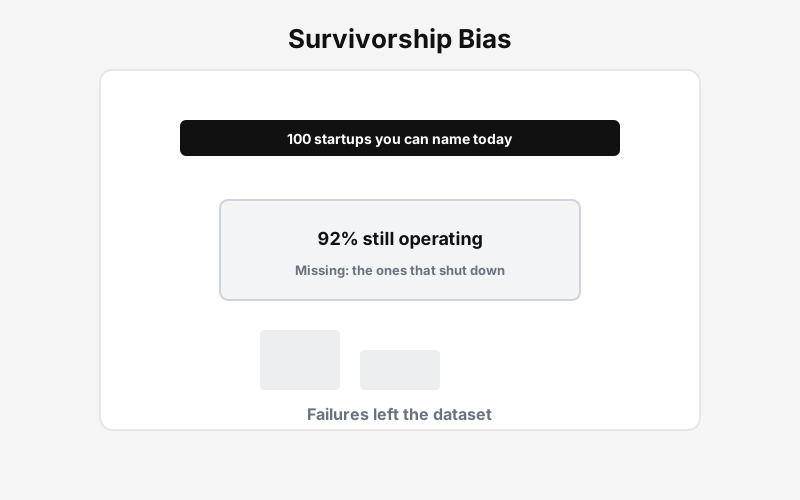
Survivorship bias is selection bias after the fact. The dataset keeps the winners and drops the failures. Startup headlines, five-star reviews, and top-quartile fund tables all describe the survivors, not everyone who started.
Selection bias asks who never entered the sample. Survivorship bias asks who left before you measured. Both distort the rate. This one is especially common when success stories are the only stories you can still see.
Survivorship bias answers: Who failed or disappeared, and would the headline still hold if they were counted?
Example: who is still in the dataset?
Compare the visible survivors with the full cohort that started. Failures that dropped out can make success look far more common than it was.
Are most new startups still thriving?
Survivors
88%
n = 120
Full cohort
34%
n = 1,000
Gap
+54 pts
survivors vs everyone
106 successes visible vs 340 in the full cohort at the true rate
Who dropped out: Startups that shut down or never got press coverage. You only hear from survivors. The visible cohort looks healthy while most launches quietly fail. The survivor slice overstates success by a wide margin. Ask what dropped out before you copy the playbook.
The math
What the headline shows
If 88% of still-operating startups look healthy, that rate ignores the ones that shut down. The numerator and denominator both exclude failures.
What actually happened
Include launches that closed, funds that stopped reporting, and users who churned before leaving a review. The true rate is often far lower than the survivor rate.
Size of the distortion
A +54 point gap means visible winners overstate success by that much. Copying their playbook without the failure data is copying a filtered slice of history.
A simple application: portfolio stories
Investors study companies that made it. Product teams read reviews from users still active enough to post. Leaders benchmark against peers still in the league table. In each case, failures left the dataset before the analysis began.
Portfolio stories: who left the dataset
Raise dropout. Visible success rate rises because failures already exited.
59% among survivors — true cohort ~45%
Cohort flow
Success rate (%)
True: 45% · Survivors only: 59%
Survivor rate
59%
True rate
45%
Dropout
40%
Optimize (move here)
- • Report started vs remained on every success metric
- • Pair reviews with churn/exit data
Hold (do not over-react)
- • Benchmarking from league tables of survivors only
Escalate if
- • Exit reasons cluster in one product area
Ask how many started, how many remain, and what happened to the rest before strategy from success stories alone.
Ask for the full cohort: how many started, how many remain, and what happened to the rest. Pair visible success rates with exit data, churn, or closed-book records before you set strategy from survivor stories alone.