Math, Applied
PCA Intuition: One Axis for a Wall of Correlated KPIs
The idea
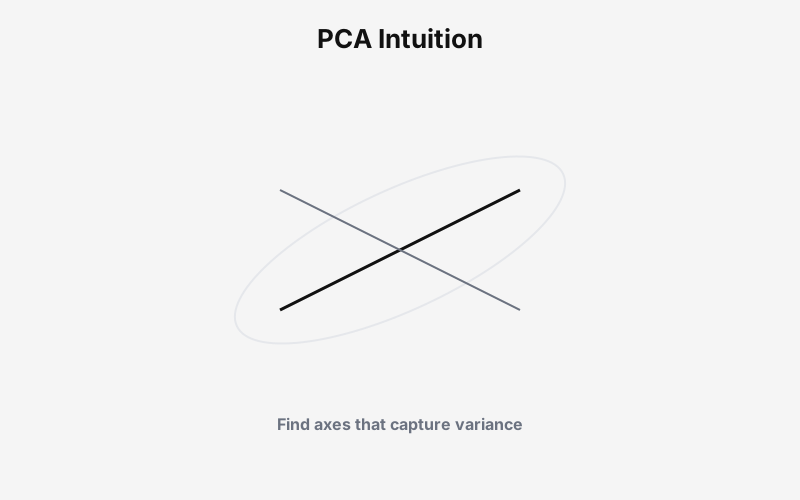
Dashboards often track ten metrics that move together: revenue, orders, active users. Principal Component Analysis rotates the axes to find directions of maximum variance. The first component (PC1) is the single score that captures most of the joint movement.
PCA answers: Can we summarize correlated metrics with fewer composite scores without losing the main signal?
Example: variance explained by principal components
When metrics move together, one axis can summarize most of the movement.
Revenue, orders, and active users move together. One axis captures most of the story.
Metrics: Revenue, Orders, Active users, AOV
PC1
73%
PC2
14%
Rest
13%
PC1 explains 73% of variance across 4 metrics. When KPIs are redundant, one composite score can replace a wall of charts.
The math
First component
A weighted mix of standardized metrics. Weights load highest on metrics that co-move.
Scree readout
If PC1 explains 70% of variance, one composite chart may replace four redundant KPI lines for executive review.
Scale matters
Dollars and counts on different scales will dominate unless you normalize. Same rule as vectors and dot product posts.
A simple application
Use PCA for exploration and compression, not as a causal model. PC1 is a summary axis, not a lever you can pull. When metrics are independent, PCA adds little. When they are redundant, it declutters the narrative.