Math, Applied
The Gambler's Fallacy: Streaks Do Not Load the Next Trial
The idea
Five losing trades in a row feels like a win is due. Four red spins on roulette feels like black is loaded next. A sales rep misses quota three weeks and leadership expects a bounce simply because the streak has gone on long enough.
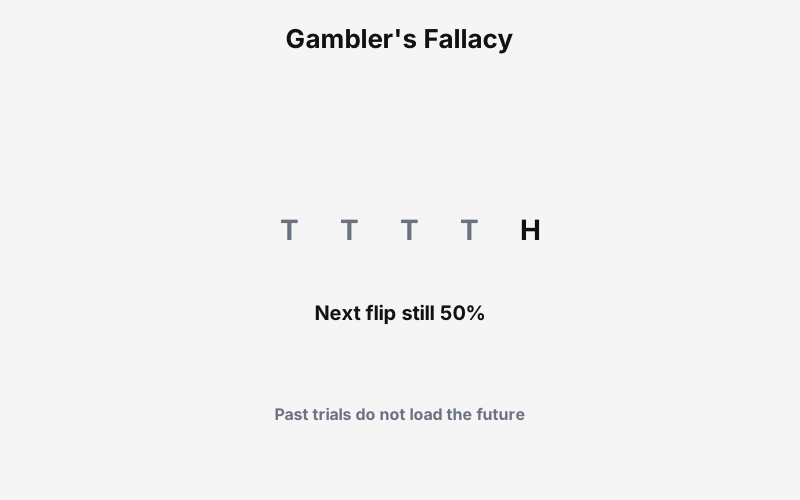
For independent trials with a fixed probability, the next outcome does not compensate for the past. The streak was unlikely. The next flip is still the same odds.
Gambler's fallacy answers: Does this process have memory, or are we imposing a story on independent noise?
Example: streaks do not change the next trial
A long run of losses feels like balance is due. For independent trials, the next probability stays the same.
Five tails in a row does not make heads more likely on flip six.
Streak probability
3.1%
5 wins in a row
Next trial
50.0%
Unchanged by the streak
A 5-win streak has probability 3.1%. The next trial is still 50.0%. Past outcomes do not change a fair process.
The math
Streak probability
A five-win streak at p = 50% has probability about 3%. Rare, but not evidence that the process changed.
No memory
Fair coins, fair dice, and stable conversion rates with enough volume do not owe you a reversal after a run of losses.
Do not confuse
Extreme performers often snap back because luck mixed with skill. That is a different post. Gambler's fallacy is claiming the next independent trial must balance the last few.
A simple application: quota pressure
Managers sometimes push harder after a slump as if outcomes must rebalance within the month. Check whether the underlying win rate changed or the streak is normal variance on a small sample. Pair with sample size and regression-to-the-mean posts before you reorganize the team.
Sales quota: streak vs stable win rate
Move streak length. The next week stays at the baseline win rate unless the process actually changed.
4-week miss streak: 11.3% likely · next week still 42% hit rate
Probabilities (%)
Miss streak: 11.3% · Next week: 42.0%
Baseline hit rate
42%
Miss streak odds
11.3%
Streak length
4 wks
Optimize (move here)
- • Separate streak stories from measured win-rate shifts
- • Pair with sample size on weekly KPIs
Hold (do not over-react)
- • Expecting automatic rebound after a miss streak
Escalate if
- • Hit rate drops 15+ pp vs trailing quarter baseline
A slump feels like a rebound is due. On independent weeks, the baseline rate has not changed. Check for real process shifts before punitive targets.
The habit: when someone says we are due, ask whether trials are independent and whether p actually moved. Stories about balance are not probability models.