Math, Applied
Weighted Averages: Roll Up the Number That Matches Volume
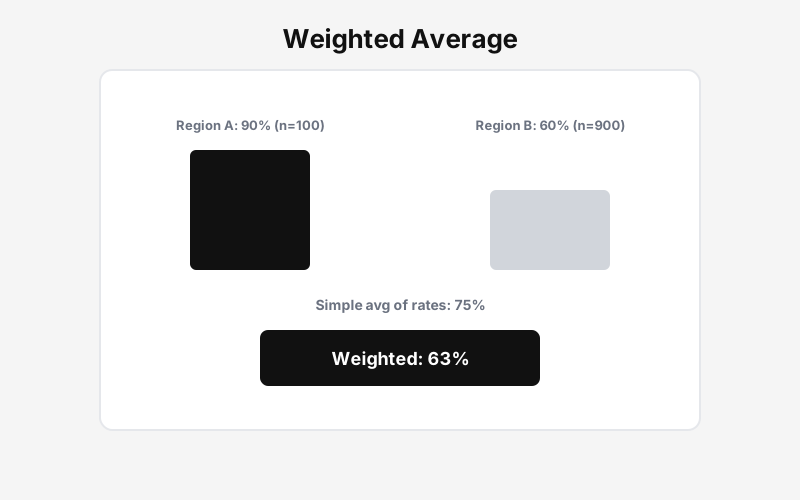
The idea
You have CSAT by region, conversion by channel, or satisfaction by plan tier. A simple average of the segment rates treats a 120-customer region like a 880-customer region. The rollup is wrong when volumes differ.
A weighted average counts every unit once. Multiply each segment rate by its volume, add, then divide by total volume. That is the company-wide number most leaders need.
Weighted averages answer: What is the true overall rate when segments are different sizes?
Example: simple average vs weighted rollup
Averaging segment rates treats a small region like a large one. Weight by volume to get the true company-wide number.
Company-wide satisfaction this quarter
| Segment | CSAT | Volume |
|---|---|---|
| North region | 88.0% | 120 |
| South region | 62.0% | 880 |
Simple average
75.0%
Mean of segment rates
Weighted average
65.1%
n = 1,000 total
Gap
+9.9 pts
simple minus weighted
The simple average (75.0%) overstates the company rate because high performers sit in smaller groups. Weight by volume (65.1%) for the true rollup.
The math
Unweighted mean of rates
North at 88% and South at 62% give a simple average of 75%. That treats both regions as half the story even when South has most of the customers.
Volume-weighted rollup
With n = 120 and 880, the weighted CSAT is about 65%. Most customers experience the lower region, so the company rate should sit closer to South than to the simple 75%.
Simpson's paradox is about direction reversing when you slice wrong. Weighted averages are about getting the level right when slices differ in size. Use both: correct rollup first, then segment tables to explain why.
A simple application: executive dashboards
Ops reviews often show regional KPIs averaged without weights. Product compares plan-tier satisfaction as if tiers were equal size. Marketing blends channel conversion the same way. Each headline can look better or worse than the experience most customers see.
Executive dashboard: unweighted vs weighted KPI
Shift weight toward the largest region. The company rollup can diverge from a simple average of regions.
Unweighted 80.0% vs weighted 76.8% company KPI
Region KPIs
Large: 72% · Small: 88%
Company rollup
Unweighted: 80.0% · Weighted: 76.8%
Unweighted avg
80.0%
Weighted avg
76.8%
Large region share
70%
Optimize (move here)
- • Publish weighted company KPI first
- • Show segment table second with sizes
Hold (do not over-react)
- • Bonuses on unweighted regional averages when weights differ
Escalate if
- • Weighted and unweighted diverge after a mix shift
Regions are balanced enough that either rollup is close.
Report the weighted company number first. Show segment breakdown second. Targets and bonuses should track the weighted rollup unless you explicitly care about a small slice.