Math, Applied
Will We Run Out? Probability of Stockout in Real Inventory Decisions
The idea
Inventory teams rarely ask whether stockout is possible. They ask if the risk is acceptable. Probability turns that into a clear decision: if we reorder at this level, what are the chances demand outruns supply before the next shipment arrives?
Reorder too late and customers see “out of stock”. Reorder too early and cash gets trapped on shelves. The right point is a business choice, but probability makes the tradeoff explicit.
Better question than “will we stock out?”: “what stockout risk are we willing to run?”
Example: reorder point vs stockout probability
Set a reorder point and see the probability of running out during supplier lead time. This helps inventory decisions move from gut feel to explicit risk.
Cafe chain restock: weekend spikes make stockouts expensive.
Lead-time demand
840 bags
Reorder point
900
Stockout probability
20.9%
Stockout risk curve (%)
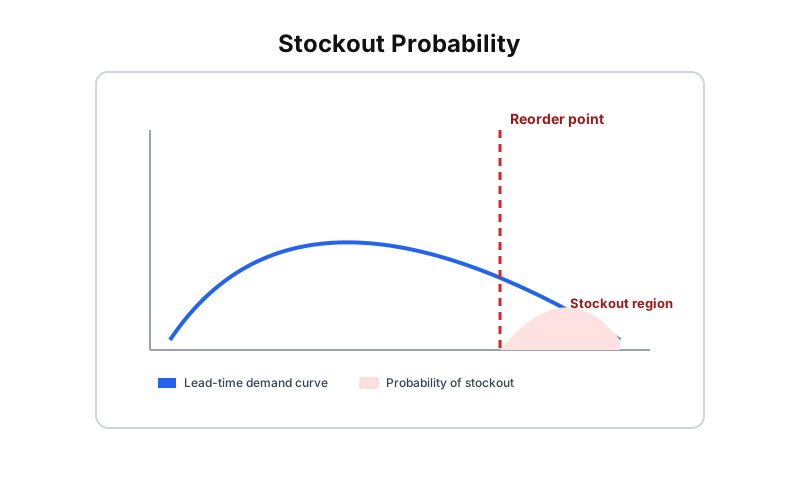
Lower reorder points look efficient, but risk stockouts. Higher points reduce risk but tie up more inventory.
Stockout risk is 20.9%. This can work for low-margin items, but watch lost sales and service complaints.
The math
Demand during lead time
Mean demand scales with lead time. Variability scales with the square root of lead time. That gives a distribution of possible demand before restock arrives.
Risk definition
Pick a reorder point and compute the area of the demand curve beyond it. That area is your stockout risk.
Operational readout
Many teams set service-level targets by SKU tier, then back into reorder points that meet those probabilities.
A simple application: restock policy before a promotion
A skincare SKU usually sells 85 units per day, but promo weeks are volatile. Lead time is 10 days. At a reorder point of 900, stockout risk is high enough to hurt conversion and ad efficiency. Raising reorder to 1,200 drops risk materially and protects campaign spend.
Reorder point: balance stockout risk and inventory drag
Move demand, lead time, and reorder point. See how fast stockout risk drops as you add buffer.
Reorder 980 gives ~78% service level (22% stockout risk)
Stockout risk by reorder point (%)
Demand vs reorder buffer
Lead-time demand: 855 · Reorder point: 980 · Safety stock: 125
Stockout risk
22%
Safety stock
125 units
Carrying index
115
Optimize (move here)
- • Set reorder points by target service level per SKU tier
- • Review supplier lead-time variability monthly
Hold (do not over-react)
- • One reorder rule for every SKU regardless of volatility
Escalate if
- • Stockout risk > 20% on revenue-driving items
Risk is high for customer-facing SKUs. Raise reorder point or shorten lead time.
The habit: show reorder points with explicit stockout probability in planning docs. This keeps inventory decisions aligned with customer experience and working capital.