Math, Applied
Probability in Real Decisions: Count Wins, Not Stories
The idea
Probability is how often something happens out of all the chances you gave it. In business data, that usually means successes divided by trials: email opens, deals closed, users who adopted a feature.
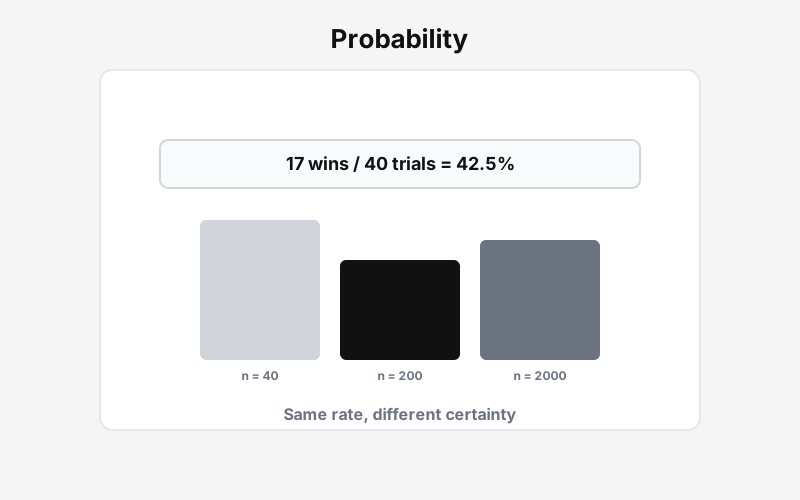
The number is simple. The hard part is knowing when to trust it. Seventeen wins out of forty trials is 42.5%, but that estimate wobbles more than seventeen wins out of four hundred.
Probability answers: If we ran this again under similar conditions, how often should we expect the outcome?
Example: estimate a win rate from past trials
Probability from data is successes divided by trials. Drag both to see how the estimate shifts and how stable it feels at different sample sizes.
Past subject-line tests that hit the open-rate goal
Estimated rate
42.5%
Counts
17 wins / 40 trials
Independent chain example: 42% then 55% both hit = 23.1% overall
At n = 40, a rough 95% band is 27.2% to 57.8%. Useful for planning, not a final answer.
The math
Estimate from data
17 subject-line tests hit goal out of 40 tries gives P(win) ≈ 0.425. That is your best read from past data, not a promise about the next send.
How much the estimate wobbles
Small n or p near 50% means a wider band around your estimate. That is why probability posts pair naturally with sample size and confidence intervals.
Chained events
If two steps each have a 50% chance and do not affect each other, both happening is 25%, not 50%. Product funnels and multi-step sales processes use this constantly.
Probabilities live between 0 and 1. They should describe the population you care about, not only the people who replied to a survey. A rate from twelve beta users is a start, not a final forecast.
A simple application: win rates
Growth teams estimate test win rates before they rank ideas. Sales ops track close rates by segment. Product teams read adoption from rollouts. The habit is writing down successes and trials, then stating the rate with sample size in the same breath.
Win rates: successes, trials, and noise
Move wins and trials. See how rate stability changes with sample size.
18/60 → 30% (rough band 18–42%)
Outcomes
Rate band (%)
Low: 18% · Rate: 30% · High: 42%
Win rate
30%
Trials
60
Band width
23 pp
Optimize (move here)
- • Report successes and trials together
- • Widen planning range when trials are small
Hold (do not over-react)
- • Ranking pipelines on 8/12 close rates
Escalate if
- • Decision spend exceeds EV at low end of band
Rate is stabilizing. Safe to feed into EV or forecast with eyes open.
When the estimate is shaky, gather more trials or widen your planning range. When it is stable, you can feed it into expected value, forecasting, or experiment design with more confidence.