Math, Applied
Up From Last Month: Is That Normal for March? Seasonality in Real Decisions
The idea
Revenue dips after holiday peak. B2B signups jump in January. Consumer apps cool in summer. None of that requires a broken product. It requires the right calendar baseline.
Remember it in one line: compare to the same month last year, not only the month before.
Month-over-month is fine for ops standups. Year-over-year is often better for seasonal businesses because it strips out the calendar shape. Benchmark posts cover which baseline to pick; this post covers repeating patterns in time.
Seasonality answers: Is this move unusual, or is it the calendar?
Example: same month, two baselines, two stories
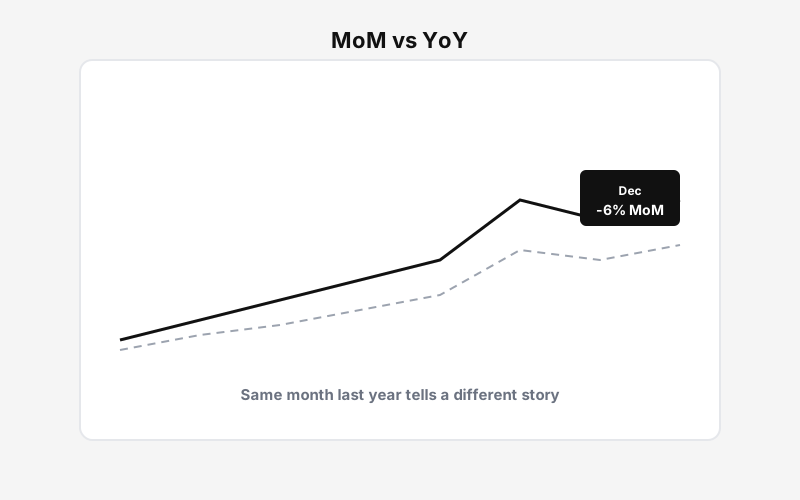
Solid line is this year. Dashed is same month last year. Compare MoM and YoY before you declare a win or a crisis.
December looks down vs November — but up vs last December.
Focus month
Dec: $3.2M
vs last month
-5.9%
vs last year
+10.3%
Dec: -5.9% vs last month but +10.3% vs same month last year. Seasonality flipped the story.
The math
Month over month
Sensitive to short swings. December vs November in retail often looks bad even when the business is healthy vs last December.
Year over year
Aligns seasonality. March vs March controls for spring break, fiscal year starts, and holiday hangover.
Which to show
Ops cadence: MoM. Board and planning: YoY. Always label which clock you used.
A simple application: the monthly business review
December revenue is down 6% vs November. Leadership panics. Same December is up 10% vs last December. The product did not break; the calendar did what it always does after November peak. The slide should show both baselines and state which one drives hiring and inventory decisions.
Monthly business review: MoM vs YoY
Move December revenue. Watch month-over-month panic disagree with same-month-last-year context.
Dec -6% MoM but +11% YoY
Revenue levels
Nov: $11.2M · Dec: $10.5M · Dec LY: $9.5M
Changes
MoM: -6% · YoY: +11%
December
$10.50M
MoM
-6%
YoY
+11%
Optimize (move here)
- • Plot 12 months with prior-year overlay
- • Label which baseline drives hiring/inventory
Hold (do not over-react)
- • November-to-December panic in retail without YoY
Escalate if
- • YoY also negative for core cohorts
Calendar hangover after November peak — not necessarily a broken product.
The habit: plot twelve months with prior-year overlay. Flag known seasonal events before the review. Pair with cohort analysis when signup mix shifts at the same time.