Math, Applied
More Tickets, Same Workload? Rates vs Counts in Real Data
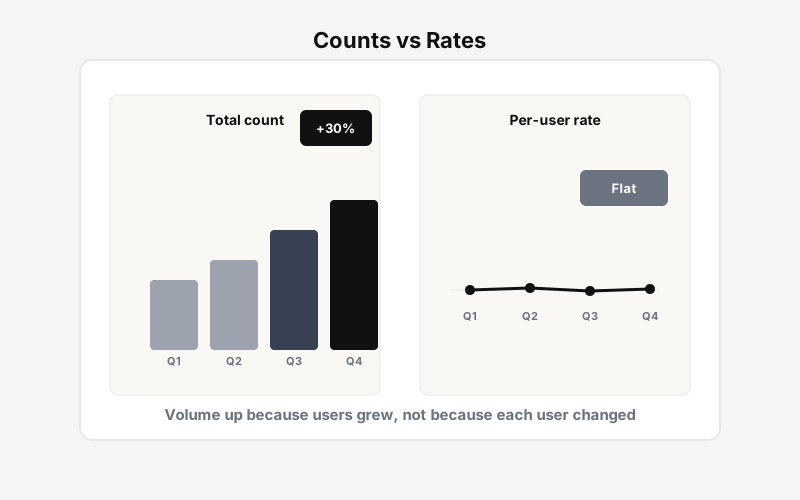
The idea
Total support tickets can rise 30% while tickets per active user stay flat. The user base grew. The product is not necessarily worse. Headline counts hide the denominator.
Remember it in one line: always ask per what before you react to a total.
Counts answer how much happened. Rates answer how intense it was per user, transaction, or session. Dashboards that only show totals often trigger hiring and roadmap changes that track growth, not quality.
Rates vs counts answers: Did behavior change, or did scale change?
Example: total count up, rate per user flat
Left: total volume line rising quarter over quarter. Right: per-user rate line stays flat.
Ticket volume up 30% — but tickets per active user are flat.
Total tickets
Tickets per active user
Total tickets
61,500
+13% vs prior quarter
Tickets per active user
0.41
-2.4% vs prior quarter
Active users / transactions
150,000
Q4: Total tickets up 13% while Tickets per active user moved -2.4%. Growth in users drove the headline count.
The math
Decompose the headline
If users grow 25% and rate is flat, total count grows ~25%. If rate rises 10% with flat users, that is a real intensity shift.
Pick the right denominator
Support: tickets per active user. Fraud: alerts per thousand transactions. Growth: logins per monthly active user. The denominator must match the decision.
Habit
Weighted average posts cover rolling up segments. This post covers splitting volume from intensity before you staff a war room.
A simple application: the support staffing review
Q4 tickets hit a record. Leadership wants six new agents. Tickets per active user moved from 0.41 to 0.42 while users grew 15%. The intensity story is flat; the volume story is growth. Staff for scale, not for a phantom quality crisis.
Staffing review: what moved, what to optimize
Compare Q3 to Q4. Charts show total tickets, tickets per active user, and active users. The action panel tells you which lever to pull.
Tickets hit a record. Rate per user barely moved. Users grew 15%.
Leadership wants six new agents.
Total tickets
+18% Q3 → Q4
Tickets per active user
0.41 → 0.42 (+2.4%)
Active users
+15% Q3 → Q4
Q4 total tickets
63,000
Record headline number
Rate per user
0.42
Intensity signal
Volume-based hires
~4
Rough agents for ticket delta (not a budget)
Leadership ask
6 agents
Compare to volume math above
Optimize (move here)
- • Staff to total ticket volume at the new MAU level
- • Tie hiring plan to user growth forecast, not panic on the headline
- • Track tickets per agent against volume, not rate alone
Hold (do not over-react)
- • Product quality war room — rate is flat
- • Blaming a broken release when intensity did not shift
Escalate if
- • Tickets per active user crosses ~0.45 for two quarters
- • Same ticket types spike within cohorts, not just totals
The habit: pair every total with a rate using the denominator ops already trusts. Flag when count and rate diverge. Cohort analysis helps when the user mix shifts at the same time.