Learning Through Food
Rasmalai Cake
The moment
My son was turning two. I wanted to make the cake myself. Not because I had any baking experience, but because it felt like the right kind of effort for a small birthday at home. I had never baked a cake before. I had only recently learned to make rasmalai on the stove, and that already felt like a stretch.
A rasmalai cake seemed like a way to connect something I was starting to understand with something I had never tried. Familiar flavor, unfamiliar format.
Why I learned this
Baking and stovetop cooking ask different things of you. With rasmalai, I learned to watch texture and know when to stop. With a cake, you commit earlier. You mix, you bake, and you find out later whether the structure held. There is less room to adjust in the middle.
I wanted to see if the patience from making rasmalai would transfer. It did, but not in the way I expected. Baking rewards reading the recipe carefully and trusting the timer more than your instincts at first.
The experience
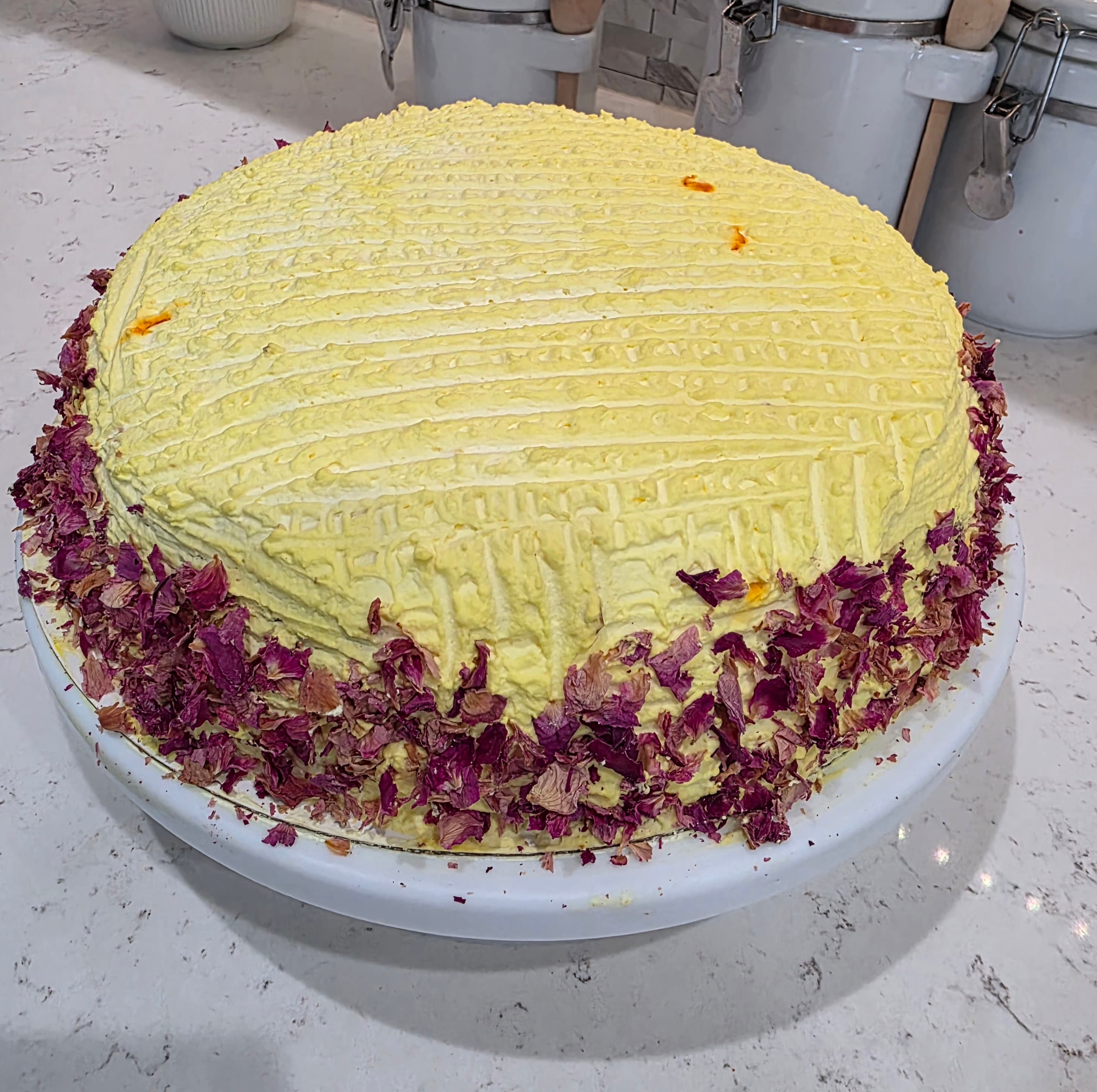
The cake itself was a simple sponge. The part I cared about was the milk soak and the frosting: cardamom, saffron, rose. I wanted it to taste like rasmalai without trying to put actual paneer discs inside a layer cake. The frosting went on thicker than I planned. The rose petals around the base were partly decoration, partly a way to hide an uneven edge.
What surprised me was how much the small finishing steps mattered. A little saffron in the soak. Letting the cake cool completely before frosting. Those details made more difference than any one heroic step during mixing.
My son did not care about the uneven swirl on top. He cared that there was cake. That helped me see the gap between how I judge my own work and how the people I made it for experience it.
The recipe I follow
Ingredients
For the sponge
- 1½ cups all-purpose flour
- 1 cup sugar
- ½ cup oil or melted butter
- 1 cup milk
- 2 teaspoons baking powder
- ½ teaspoon cardamom powder
- Pinch of salt
For the milk soak
- 1 cup warm milk
- 2 to 3 tablespoons sugar
- Pinch of saffron
- ¼ teaspoon cardamom powder
For the frosting
- 2 cups whipping cream, chilled
- ½ cup powdered sugar, or to taste
- ¼ teaspoon cardamom powder
- Pinch of saffron soaked in warm milk
- Dried rose petals and chopped pistachios for garnish
Steps
- Mix dry ingredients. Whisk wet ingredients separately, then combine until just smooth. Pour into a greased round pan.
- Bake at 350°F (175°C) for about 30 to 35 minutes until a toothpick comes out clean. Cool completely on a rack.
- Warm the soak ingredients until sugar dissolves. Poke holes in the cooled cake and spoon the milk over slowly, letting it absorb.
- Whip cream to soft peaks with powdered sugar, cardamom, and saffron milk.
- Frost the cake. Chill at least one hour before serving. Garnish with rose petals and pistachios.
What I learned
This was my first cake. It was not perfect. The frosting was heavy, the top was not smooth, and I spent more time on it than I expected. But it held together, it tasted like what I intended, and my son was happy.
Starting before you feel ready is its own skill. I had made rasmalai, so I understood the flavors. I had not baked, so I did not understand the structure. Learning one does not automatically teach the other. You still have to try.
A cake that connected something familiar to something new. That is what I want to keep doing in the kitchen: not waiting until I feel like an expert, but building on what I already know one dish at a time.