Learning Through Food
Milk Burfi
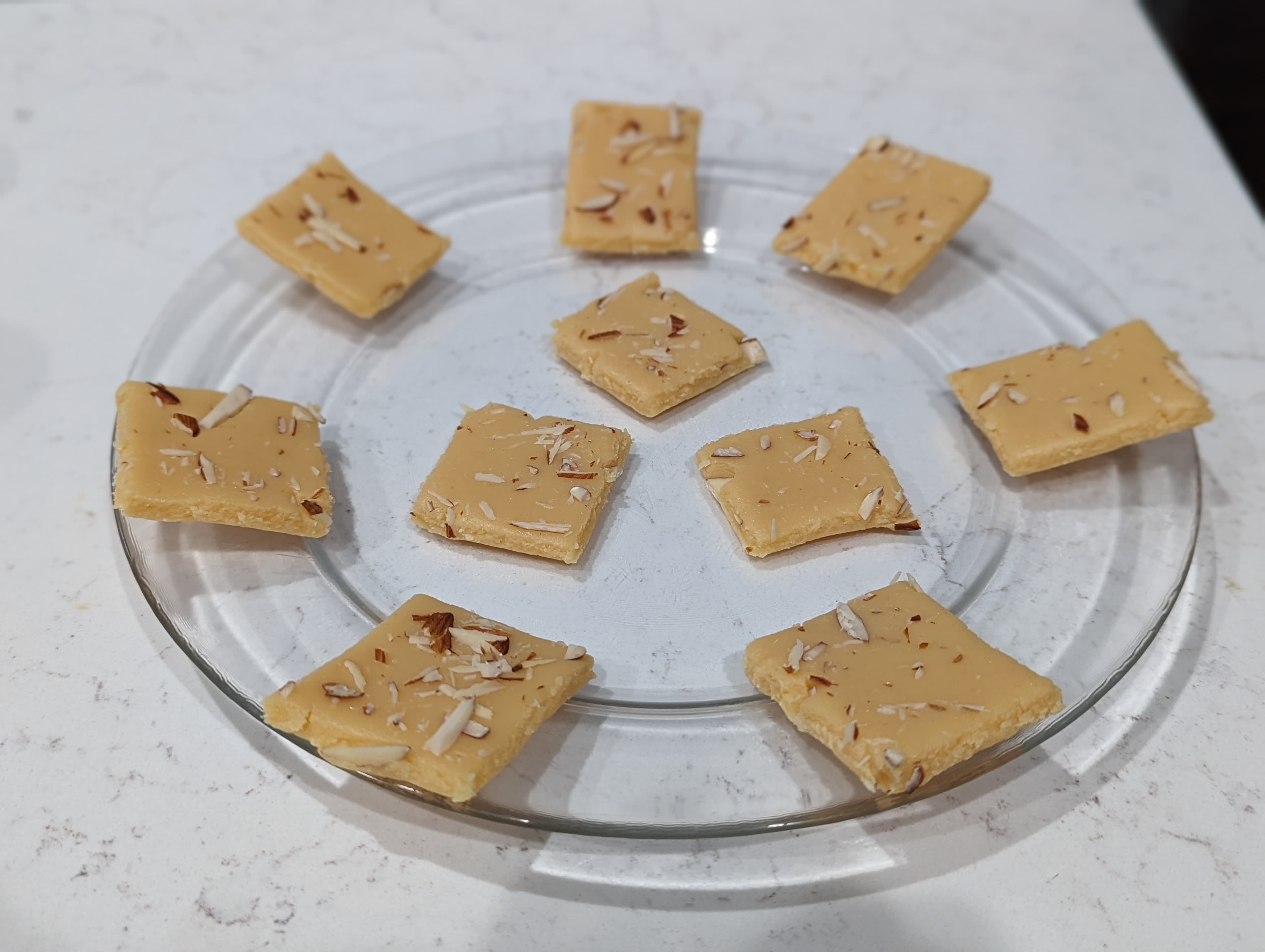
The moment
Burfi is the sweet I associate with festivals and visits. Small squares, dense and milky, often topped with nuts. It looks precise, like it requires skill I do not have. The version I make is simpler than shop burfi, but it taught me something similar: you have to watch the pan and stop at the right moment.
Why I learned this
I wanted a sweet I could make at home without deep frying or multiple steps. Milk burfi uses pantry staples: milk powder, a little ghee, sugar, and cardamom. It sets in a tray and cuts into pieces. That structure appealed to me after the more fluid process of making rasmalai.
It also felt like good practice in timing. Burfi does not warn you loudly when it is ready. The mixture thickens gradually. Leave it too long and it turns dry. Stop too early and it will not hold a clean square.
The experience
The stirring is steady, not fast. Ghee, milk powder, and sugar come together into a thick paste that pulls away from the sides of the pan. That is the signal. Before that point it is too soft. After it, the texture gets grainy.
I press almond slivers on top while it is still warm. Cutting happens after it cools completely. Rushing that step cracks the squares. Waiting is part of the recipe.
The recipe I follow
Ingredients
- 2 cups milk powder
- ½ cup sugar
- ¼ cup ghee
- ½ cup warm milk
- ½ teaspoon cardamom powder
- 2 tablespoons slivered almonds or pistachios
Steps
- Heat ghee in a heavy pan on low. Add milk powder and stir for one to two minutes until it smells nutty.
- Add sugar and warm milk. Stir continuously. The mixture will thicken and start to leave the sides of the pan.
- Add cardamom. Cook one to two minutes more until the mixture holds together in a mass.
- Spread evenly in a greased tray. Press almond slivers on top while warm.
- Cool completely, at least one hour. Cut into squares with a sharp knife.
What I learned
Burfi looks like a recipe about ingredients. It is really a recipe about when to stop. The same mixture at two different times produces different results. Learning to read the pan matters more than getting the measurements exact.
That idea shows up elsewhere too: in rasmalai, in akki rotti, in the cake soak. Different dishes, same lesson. Pay attention to the point where the process shifts, and do not push past it.